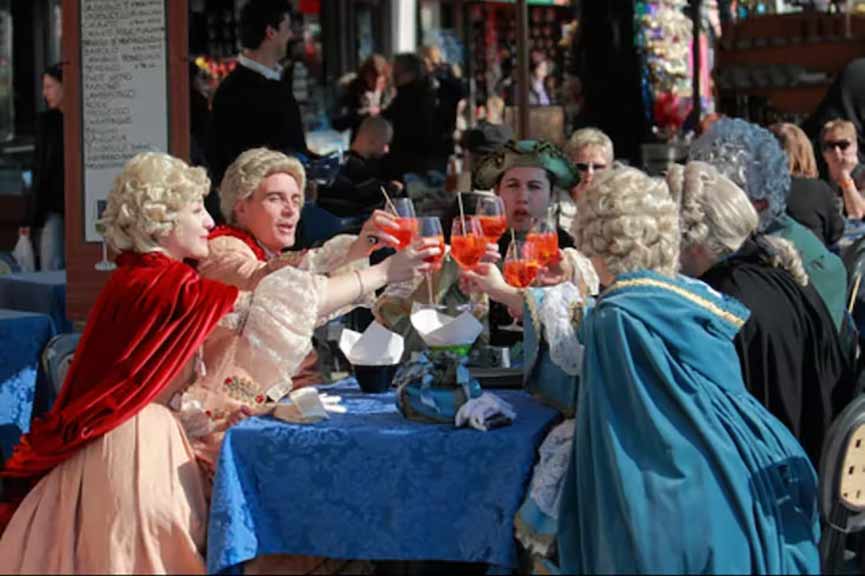
Venetian style carnival pub tour - Venice
Venetian style carnival pub tour: € 74 per person.
Book now and skip the line
What you will do during the experience
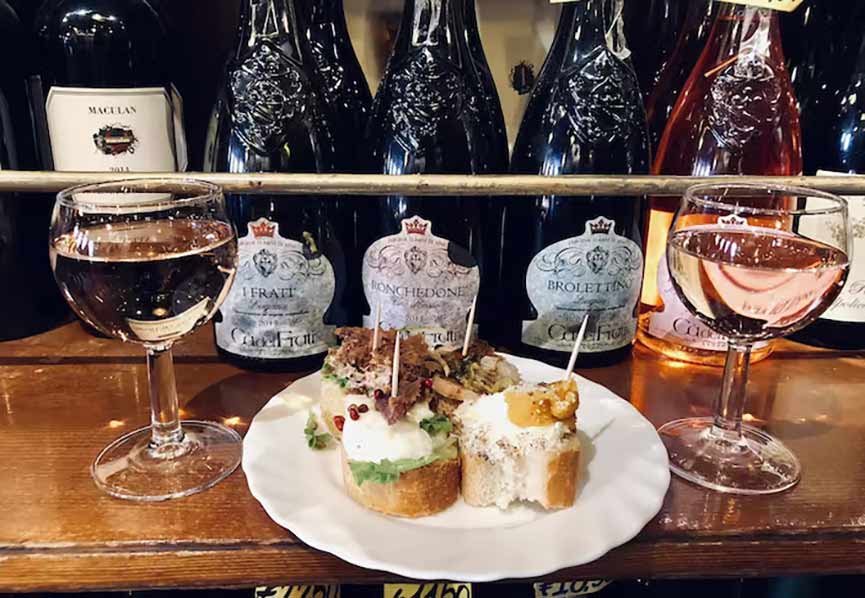
– Visit with Venetian guide of 3 bacari (Venetian bars)
– 2 glasses of wine + 1 spritz.
– Duration 2 hours.
The Venetian-style carnival bar crawl starts at the Ca' Rezzonico museum, right next to the vaporetto stop at 5:00 PM, where you'll meet the friendly Venetian guide with the sign "I do it the Venetian way".
Crossing small alleys and campielli you will visit 3 bacari (Venetian bars). In each bar you will have a ombra or a glass of local wine and in the last bar you will try the classic Venetian spritz.
The only condition is to be over 18: so bring your ID.
Meeting point: Ca' Rezzonico boat stop along Grand Canal - Venice
Book now and skip the line
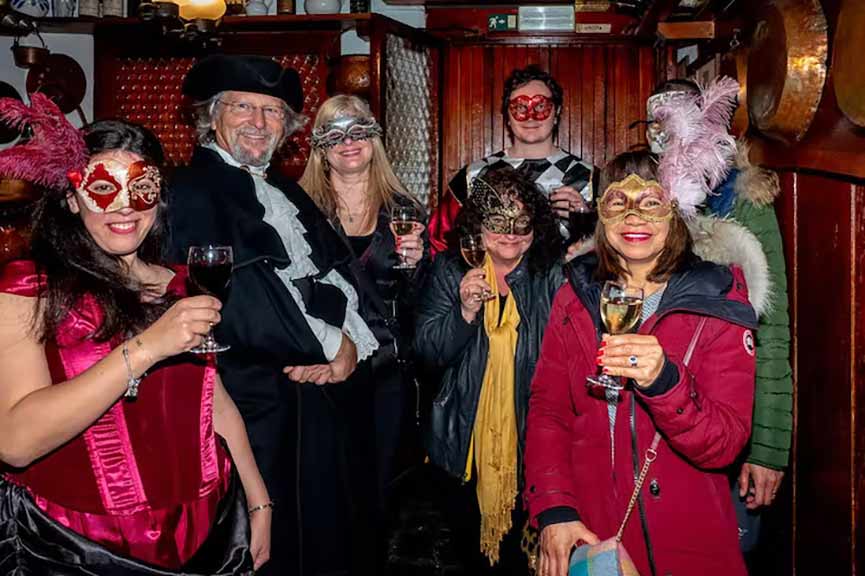
History of the Carnival of Venice
The term would derive from the Latin phrases carnem levare or carne levamen which mean "to remove the meat", with reference to Shrove Tuesday as the last possible day to devote oneself to sumptuous lunches before the usual food deprivations during the period of Lent. A feast therefore linked to Christian and Catholic worship it seems, even if it is almost certain that the tradition dates back to the Greek and Roman period and was absorbed - like many other social and political aspects of the ancient world - by the subsequent Christian society. Just think of the Saturnalia Festival, which was held in Rome from 17 to 23 December and which was characterized by an overthrow of the social order in which slaves became free, dined with their masters who also became servants. And there was no shortage of masks and divinity disguises.
The same suspension of established social rules can be found in the Venetian Carnival which appeared in historical documents starting from 1094, when in a document by Doge Vitale Falier the term Carnival is reported and a show aimed at public amusement is mentioned. In the following years, citizens of all classes crowded the calli of Venice, almost always masked to free themselves from any social convention.
"Buon giorno siora maschera". It was the simple and equal greeting for everyone that citizens addressed in the city.
Shortly afterwards, an edict of the Senate of the Republic declared the period preceding Lent a holiday; in fact, Carnival lasted from December 26 until the day before Ash Wednesday, which became Shrove Tuesday.
In these days it was possible to go around Venice masked and it was allowed to put the aristocratic power in the sedan that assumed all the political offices. In fact, if we look at the date, 1296 precedes by only one year the Serrata del Maggior Consiglio in which the noble patricians excluded the people from public administration.
After all, the distraction of the masses with public spectacles and the possibility of an outlet for discontent, by allowing a temporary public derision of power, have always been a powerful weapon in the hands of those who exercise, and want to preserve, power.
However, the exercise of this freedom was not exempt from trespassing in the field of illegality - with muggings, robberies, harassment and rapes - and so from 22 February 1339 the Senate decreed the nocturnal ban on circulating in masks and in the following century, on 24 January 1458, the ban also arrived on entering sacred places dressed as religious to prevent libertine acts from being carried out with the nuns.
In the same way it was forbidden to carry weapons under the disguise and to exercise prostitution outside the free zones established in the city (such as the famous Castelletto di Rialto) taking advantage of the mask; the penalty was banishment for 4 years from Venice after being publicly whipped in Piazza San Marco.
The arrival of the French in the city in 1797, who decided to cede Venice to the Austrians with the Treaty of Campoformio (October 17, 1797) but not before having stripped it of every possible good, determined the end of the Carnival and the ban on wearing masks in public; a decision taken in a climate in the city of strong aversion to the French rulers first, and to the Austrian ones after January 18, 1798.
The rebirth of the Venice Carnival took place by decision of the city municipality which in 1979 re-established public celebrations, accompanied by a rich program of events which since then has never ceased to attract hundreds of thousands of visitors to the city from all over the world in every edition.
|